


Slab Leak Detection
A slab leak runs under your concrete floor, not inside a wall or attic you can peek into. That means the usual warning signs show up late, after water has already been moving for a while. Our slab leak detection crew finds the exact spot fast, using tools that read through concrete instead of breaking it.
Not Your Average Leak
A leak under a sink or behind a washing machine announces itself fast. Water pools somewhere you can see, and you call someone that day.
A slab leak is different. The pipe sits under a poured concrete floor, so nothing pools where you’d notice it right away. The first clue is usually something indirect, like a bill or a floor that feels off.
By the time most people call, the leak has typically been running for weeks.
Along with slab leak detection, our Torrance team also handles underground leak detection, leak repair, and commercial leak detection. Whatever the source of your water loss, we pinpoint it accurately before any digging or repair begins — see all our leak detection services.
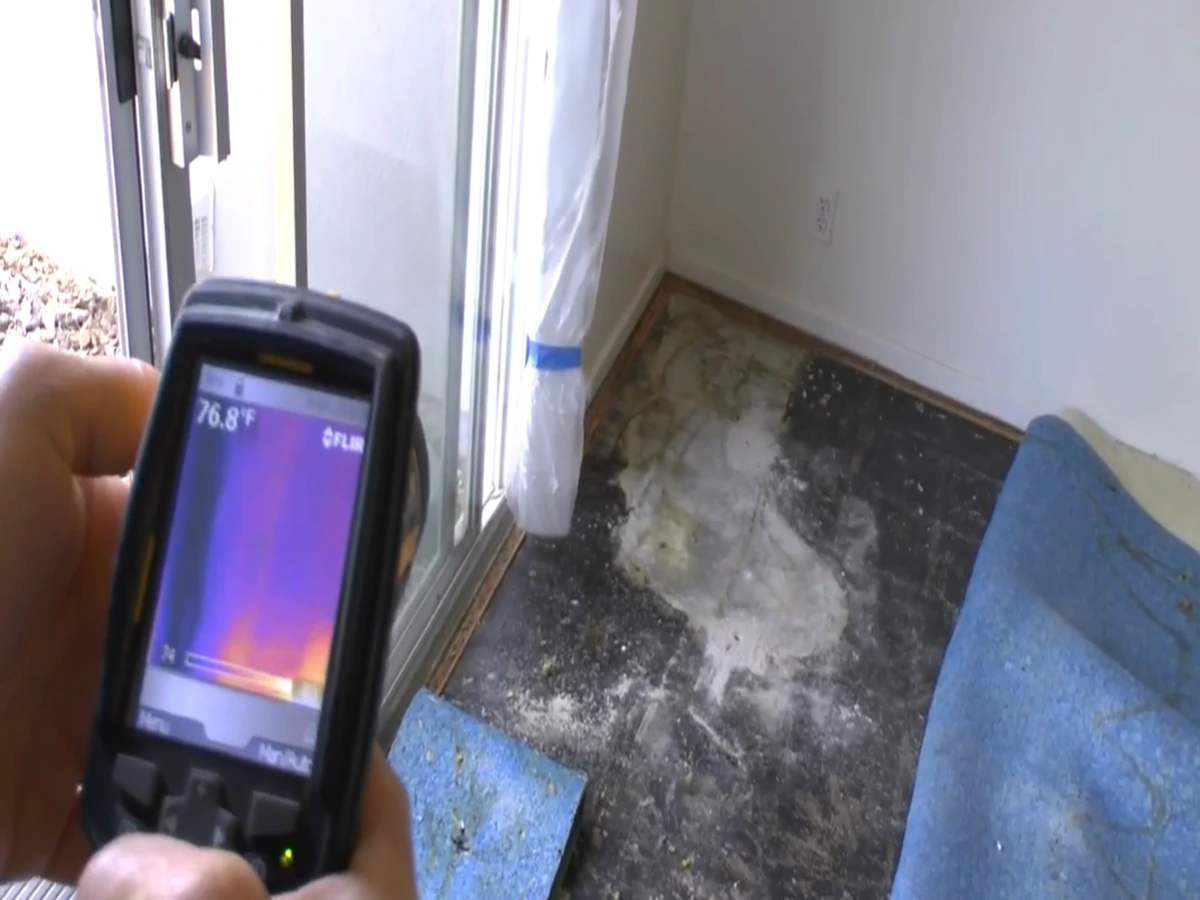
Thermal Imaging for Slab Leaks
Slab leaks often show up as a warm or cool patch on the floor long before any visible damage appears. We use thermal imaging to scan the slab and flag temperature anomalies caused by water moving beneath the concrete, then confirm the exact spot with acoustic listening equipment before any flooring or slab is opened up.
Signs A Slab Leak Has Started
None of these prove it on their own, but two or more together is worth a call.
A Warm Patch On The Floor
Usually over tile or hardwood, most often near the water heater or a bathroom.
Carpet That Stays Damp
One section that never quite dries, even with nothing spilled on it.
A Crack That Showed Up Out Of Nowhere
A new hairline crack in the slab, the wall, or the floor tile.
A Water Heater That Won’t Shut Off
It cycles far more than normal, running almost constantly.
Running Water With Everything Off
A faint sound under the floor when every fixture in the house is shut.
A Bill That Keeps Climbing
Usage habits haven’t changed, but the number keeps going up anyway.
Why Slab Leaks Happen Here
A few local conditions make this part of the South Bay more prone to slab leaks than people expect.
Pipes That Rub For Years
Hot and cold water cycling through a copper line makes it expand and contract, over and over, for decades. That constant movement rubs the pipe against the concrete and rebar around it, and eventually wears a pinhole straight through the wall.
Soil That Swells And Shrinks
Parts of the South Bay sit on real expansive soil. North Torrance and the Walteria area have it naturally, and a separate pocket in south Torrance got adobe fill trucked in during 1960s development. That soil expands when it’s wet and contracts when it dries out, and the movement puts steady stress on any pipe running through or beneath the slab.
Water Pressure That Runs High
City water pressure that sits above the recommended range adds constant load to a line that’s already working against concrete and shifting soil.
How We Confirm It’s A Slab Leak
A slab leak has to be pinpointed before anything gets opened. Guessing means cutting concrete in the wrong spot, and that’s an expensive mistake.
Sound Tracing
A pressurized line makes a faint sound even through a foot of concrete, and the right equipment picks it up.
Thermal Imaging
A leaking line changes the temperature of the slab just above it, and a thermal camera reads that shift across the floor.
Tracer Gas
For the trickiest spots, a harmless gas gets pushed into the line, and it surfaces through the concrete directly above the break.
Camera And Pressure Confirmation
A final pressure test and camera check confirms the spot before we open anything.
Two Ways We Fix It
Once the leak is pinpointed, there are two honest options.
Spot Repair
We open a small section of the slab right at the leak and repair that piece of pipe directly. Usually the faster, less invasive option when the line is otherwise in decent shape.
Rerouting
We run a new line above the slab or through the attic, bypassing the damaged section entirely. Often makes sense on an older home where the rest of the line is close behind this leak.
Insurance And Slab Leaks
Homeowners insurance often covers the water damage a slab leak causes, and sometimes the cost of accessing the pipe itself, though every policy reads differently.
What A Slab Leak Visit Looks Like
1. You Tell Us What You’ve Noticed
A warm spot, a rising bill, a sound. Any detail helps.
2. We Read The Floor First
Sound and thermal scans happen before a single tool comes out.
3. Gas Or Pressure Locks It In
On the harder cases, tracer gas or a pressure check confirms the exact spot.
4. We Walk You Through The Findings
Plain language, not plumber jargon.
5. You Approve The Cost First
A firm number in writing before any concrete gets opened.
Slab Leaks We’ve Tracked Down
An Older Single Story Home
A warm patch near the water heater closet led to a pinhole found in under an hour with a thermal scan.
A Two Story With The Leak Under A Hallway
A faint sound behind a hallway wall traced back to a slab line, confirmed with tracer gas before a single tile was lifted.
A Slow Leak Behind A Rising Bill
Month after month the bill kept creeping up with zero visible sign, until sound and pressure testing traced it to a kitchen slab.
Slab Leak Detection Across The South Bay
We handle slab leak calls across the whole service area. Pick your city for local details and coverage.
Slab Leak Questions We Hear Most
The questions that come up almost every time we’re on the phone.
Schedule An Inspection (424) 699-0818