

Pool Leak Detection
Your pool water level keeps dropping and you’re not sure why. It could be normal evaporation, or it could be a real leak draining money straight into the ground. Our pool leak detection team finds the exact source without draining your pool or tearing out your deck.
Signs Your Pool Has A Real Leak
A pool loses some water to evaporation every week, especially during a South Bay summer. These signs point to something more.
Your water level drops more than half an inch a day, even with the cover on. Cracks show up in the pool deck or along the shell. The ground near your equipment pad stays wet or soggy for no clear reason. Your pump keeps sucking in air, or you hear a hissing sound near the plumbing lines. Algae keeps returning even though your chemical levels are balanced, which often means fresh water is being pulled in to replace what’s leaking out.
None of these alone confirms a leak, but two or three together are worth a real look.
Most South Bay backyards were built without pools in the earliest tract years. Many were added later, in the sixties and seventies, once in ground pools became more common across the area. Plenty of the plumbing and shell work in those yards is decades old, built to codes that have since changed. An older pool built during that stretch is more likely to develop a leak at a fitting, seal, or hairline crack than a pool put in within the last ten or fifteen years.
Weather plays a part too. A dry South Bay summer pulls more water off the surface through plain evaporation, which can make a small real leak harder to notice at first. Once fall arrives and evaporation slows down, the same leak becomes obvious because the water keeps dropping even though the weather calmed down.
The Bucket Test, And Why It’s Not Enough On Its Own
Fill a bucket with pool water and set it on a step, so the water level inside the bucket matches the water level in the pool. Mark both levels and check again after a day or two. If the pool has dropped more than the bucket, you likely have a leak rather than plain evaporation.
Along with pool leak detection, our Torrance team also handles underground leak detection, slab leak detection, and leak repair. Whatever the source of your water loss, we pinpoint it accurately before any digging or repair begins — see all our leak detection services.
Electronic Pool Leak Tracing
For pool leaks, we use a specialized electronic leak locator that sends a probe along the pool floor and walls to trace the exact path of water escaping through cracks, gaps, or damaged fittings. This lets us confirm the precise leak point before any repair, so you’re not paying to patch the wrong spot or drain the pool unnecessarily.
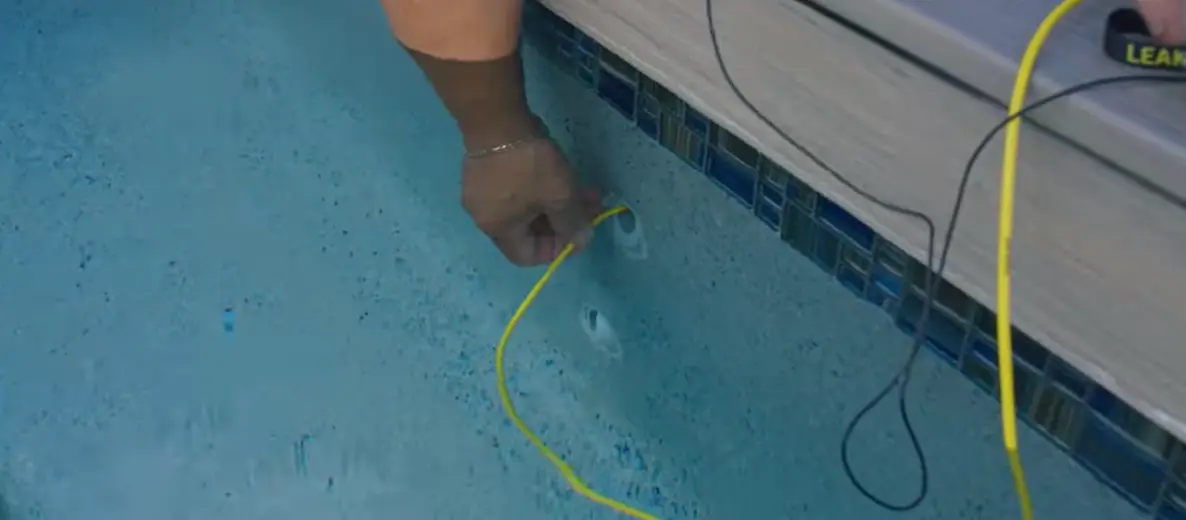
The bucket test is a good first check, but it won’t tell you where the leak is or whether it’s in the shell, the plumbing, or the equipment. That’s where a proper inspection comes in.
How We Find It
Pressure Testing The Plumbing Lines
Each pipe running to and from the pool gets isolated and pressurized. A pipe that won’t hold pressure tells us exactly which line has the leak, so only that section ever needs to be opened.
Dye Testing At Suspect Areas
A small amount of dye gets released near skimmers, lights, steps, and cracks. Moving water pulls the dye directly toward the leak, showing us the exact point.
Listening Equipment
For underground lines, acoustic equipment listens for pressurized water hissing through a break, narrowing the search before anything gets opened up.
Visual Inspection
We check the shell, tile line, equipment pad, and visible plumbing for cracks, gaps, or corrosion that a scan alone might miss.
Common Places Leaks Start
Skimmer Throat Or Housing
A common spot for cracks to form, especially in older plaster pools.
Light Niche
The fixture where the pool light sits can develop a gap around its seal over time.
Return Jets And Main Drain
Fittings here can loosen or crack, especially with ground movement over the years.
Equipment Pad Plumbing
Above ground pipes and unions near the pump and filter are an easy, low cost fix once found.
The Shell Itself
Less common, but a hairline crack in plaster or gunite can leak slowly for a long time before it’s obvious.
Repair Options
A cracked fitting or loose union at the equipment pad usually gets replaced same visit. A skimmer or light niche leak often gets resealed without major excavation. A plumbing line leak may need a section repair, similar to a spot repair on household pipe. A shell crack typically needs a patch matched to your pool’s surface, plaster or pebble finish included.
Why It Costs More To Wait
A pool that loses even a quarter inch of water beyond normal evaporation adds up fast on a water bill, especially with South Bay water rates. Refilling also means adding fresh chlorine, balancing chemicals again, and running the pump longer to circulate a pool that never quite stays full. Left alone, a small crack or loose fitting tends to widen with time and ground movement, turning a same day fix into a bigger repair.
There’s a structural side too. Water escaping under a deck or near the equipment pad can erode the soil underneath, leading to settling or cracked concrete that has nothing to do with the pool itself. Catching a leak early keeps the fix contained to the plumbing or shell instead of spreading into the surrounding yard.
Ask About The License Before Anyone Touches Your Pool
Pool work sits under its own contractor classification in California, separate from a standard plumbing license. Before letting anyone near your shell or equipment pad, ask for their C-53 pool contractor number and look it up yourself on the state license board’s lookup tool. It takes two minutes and tells you if the license is active, expired, or was never issued.
Some jobs also need a permit pulled with the city, mainly larger shell patches or rerouted plumbing runs. A simple fitting swap or reseal almost never does. Whoever inspects your pool should be able to tell you on the spot which category your repair falls into, rather than leaving you to guess.
Walking Through A Repair Visit
1. Bucket Test Together
We run the bucket test alongside you to confirm real loss versus normal evaporation.
2. Equipment And Plumbing Check
We test the equipment and plumbing with pressure testing and a visual check of the pad.
3. Dye Testing
We dye test suspect spots around skimmers, lights, and any visible cracks.
4. A Clear Answer
We show you exactly where the problem sits and what fixing it will take.
5. The Repair
We handle the repair or point you to the right next step if it’s outside standard pool plumbing work.
Pool Leaks We’ve Found Across The South Bay
A Cracked Return Line
A backyard pool in Torrance was losing almost an inch a day. Pressure testing found a cracked return line under the deck, fixed with a short section repair in one visit.
A Hidden Light Niche Gap
A Redondo Beach pool kept clouding despite fresh chemicals week after week. Dye testing pointed straight to a hairline gap around the light niche, resealed that same afternoon.
A Slow Fitting Leak
An older plaster pool over in Manhattan Beach had gone unnoticed for months before anyone caught it. Acoustic testing found the source at a fitting behind the equipment pad, hidden from view but simple to reach once located.
Where We Handle Leak Detection
Our pool team works throughout the South Bay, from Torrance backyards out to the coast.
Common Questions From Local Owners
What pool owners tend to ask before scheduling an inspection.
Schedule A Pool Check (424) 699-0818