

How to Choose a Leak Detection Company: Questions to Ask Before You Hire
Once you know you have a hidden leak, the next decision matters almost as much as finding the leak itself: who do you call to find it? Not every company that lists “leak detection” on its website actually specializes in it, and the wrong choice can mean unnecessary demolition, vague pricing, or a leak that gets misdiagnosed. This guide covers the questions worth asking before you hire anyone.
Why this decision is different from hiring a general plumber
A general plumber is trained to fix a wide range of plumbing problems, from a clogged drain to a broken water heater. Leak detection is a narrower, more specialized skill that relies on equipment and training most general plumbers do not use every day, such as acoustic listening devices, thermal imaging, and pressure testing. Some general plumbing companies do offer leak detection as one of many services, but the quality and accuracy of that detection can vary a great deal depending on how much the company actually invests in specialized equipment and training versus treating it as a side offering.
Question 1: Is leak detection their specialty or a side service?
Ask directly whether leak detection is the company’s main focus or one of many services they offer. A company that specializes in locating leaks typically owns and regularly uses dedicated equipment, since that investment only makes sense if detection work makes up a meaningful part of their business. A company that only occasionally handles leak detection may rely more on guesswork, or may simply recommend opening up walls or flooring to find a leak the old-fashioned way, which tends to cost more in repair afterward.
Question 2: What methods and equipment do they actually use?
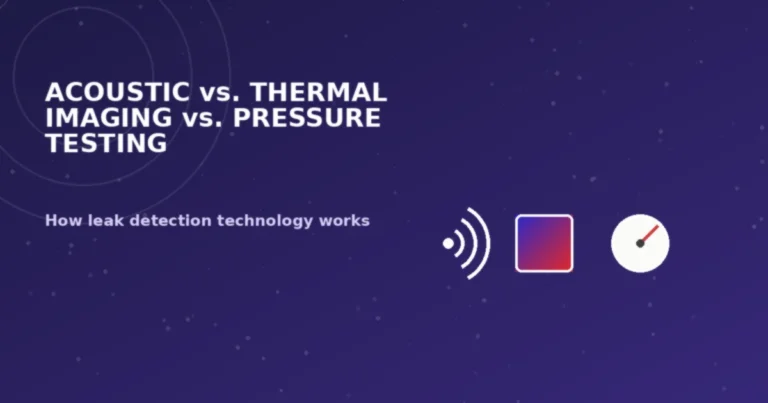
Ask what equipment they bring to a typical inspection. Reliable answers usually include some combination of acoustic listening equipment, which picks up the sound of water escaping under pressure, thermal imaging, which can reveal temperature differences caused by water in a wall or slab, and pressure testing, which isolates sections of plumbing to narrow down where a leak is coming from. If a company cannot describe their methods clearly, or simply says they will “take a look and see,” that is a sign they may not have a structured, equipment-based approach.
Question 3: How do they handle pricing and estimates?
Ask whether they provide a clear number before starting work, and whether that price is for locating the leak, fixing it, or both. Pricing structures vary across the industry, and understanding what leak detection typically costs before you call around helps you spot a quote that seems unusually low or high compared to the norm. A company that is upfront about pricing before starting work is generally a better sign than one that gives a vague range and fills in the real number after the job is already underway.
Question 4: Will they minimize damage to your home?
Ask how they approach the actual location of the leak once it’s narrowed down. A company committed to non-invasive detection will describe pinpointing the exact source before any drywall, flooring, or slab gets touched, rather than opening up a wide area and hoping to find the problem by trial and error. This single question often reveals more about a company’s actual approach than anything else, since companies that rely on guesswork tend to open up much more of a home than companies using proper locating equipment.
Question 5: Do they offer a guarantee on their work?
Ask what happens if the located leak turns out not to be the source of the problem, or if the issue returns shortly after the repair. A written guarantee on the accuracy of the detection and the quality of the repair shows a company stands behind its own work, rather than treating each job as a one-time transaction with no accountability afterward.
Question 6: How quickly can they respond?
Ask about typical response times, especially if you suspect an active leak that could be causing ongoing damage. Some companies offer same-day service for urgent situations, while others may book appointments out several days or longer. The right answer depends on how urgent your situation is, but it is worth asking upfront rather than assuming, since a slow response to a leak that is actively running can turn a moderate repair into a much larger one.
Question 7: Do they know your local area’s plumbing history?
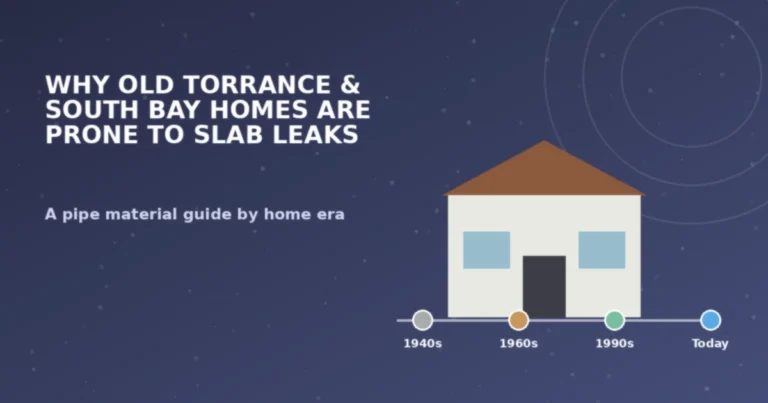
Ask whether they have specific experience with homes in your area and the common plumbing materials used when those homes were built. Older neighborhoods often share similar pipe materials and installation patterns from a certain era, and a company familiar with local housing stock can often narrow down likely causes faster than one working from general knowledge alone.
Question 8: Will you actually talk to a real person?
This may sound like a small detail, but it often reflects how a company operates overall. A company where you can reach a real, knowledgeable person on the phone, rather than being routed through a generic call center or automated scheduling system with no room for questions, is usually easier to work with when something about your situation does not fit a standard case.
Question 9: How do they explain what they find?
Ask what you can expect once the leak has been located. A company confident in its work should be able to walk you through exactly what they found, often with photos, video, or a clear verbal explanation of the leak’s location and likely cause, before moving on to repair. This matters for more than peace of mind. If you ever need to file an insurance claim or resolve a dispute with a neighbor or HOA over where a leak started, clear documentation from the inspection becomes valuable evidence, not just a courtesy.
Question 10: Do they carry proper licensing and insurance?
Ask to confirm the company is properly licensed to do plumbing-related work in your state, and that they carry liability insurance. This protects you in the rare case that something goes wrong during the inspection or repair, such as accidental property damage. A company that is upfront about its licensing and insurance, and can provide proof without hesitation, is generally more established and accountable than one that avoids the question or gives a vague answer.
Weighing experience against price
It’s natural to want the lowest price, but leak detection is one of those services where experience genuinely affects the outcome. A technician who has run thousands of inspections develops a feel for reading acoustic and thermal signals that a newer technician, even with the same equipment, may not yet have. This does not mean the most expensive option is always the best one, but when comparing quotes that are relatively close in price, leaning toward the company with more specific experience and a track record of accurate detection is usually the safer choice.
Red flags worth watching for
- A quote given over the phone with no inspection, before anyone has actually looked at the property.
- Pressure to authorize extensive digging or demolition before any locating equipment has been used.
- No willingness to explain what equipment or methods will be used to find the leak.
- No guarantee or warranty offered on the detection work or the repair.
- Reviews or a track record that mention repeated misdiagnosis or unnecessary repair work.
Why getting this choice right matters more than it seems
A leak that is misdiagnosed does not just cost you the price of the inspection. It can mean paying for unnecessary repairs in the wrong location while the actual leak keeps running, causing more water damage and a higher water bill the entire time. Getting the right company involved from the start, one that locates the leak accurately before any repair begins, is almost always cheaper in the long run than choosing based on price alone and ending up with a problem that was never actually fixed.
How this fits with deciding whether to call a professional at all
Before you even get to choosing a company, it helps to know whether your situation calls for a professional in the first place. Our guide on DIY leak detection versus professional help walks through which situations you can reasonably check yourself and which ones are better left to someone with proper locating equipment from the start.
Common questions about choosing a leak detection company
Should I get more than one quote? It is generally a good idea, especially for a larger or more uncertain job, since comparing how different companies describe their methods and pricing can reveal a lot about which one is the better fit.
Is the cheapest quote usually the best choice? Not necessarily. A very low quote sometimes means less thorough locating work or a higher chance of needing a second visit if the leak was not accurately found the first time.
Do I need a separate company for detection and repair? Not always. Many leak detection specialists also handle the repair once the leak is located, which can simplify the process, though it is still worth confirming that repair work is included and understanding how it will be priced.
The bottom line
Asking a few direct questions before you hire, about their methods, pricing, guarantee, and approach to minimizing damage, takes only a few minutes and can save you from a misdiagnosed leak, an inflated repair bill, or unnecessary damage to your home. A company confident in its own process will usually answer these questions clearly and without hesitation.